
Extended Producer Responsibility
We take care of EVERYTHING for you!
What is EPR Tire?
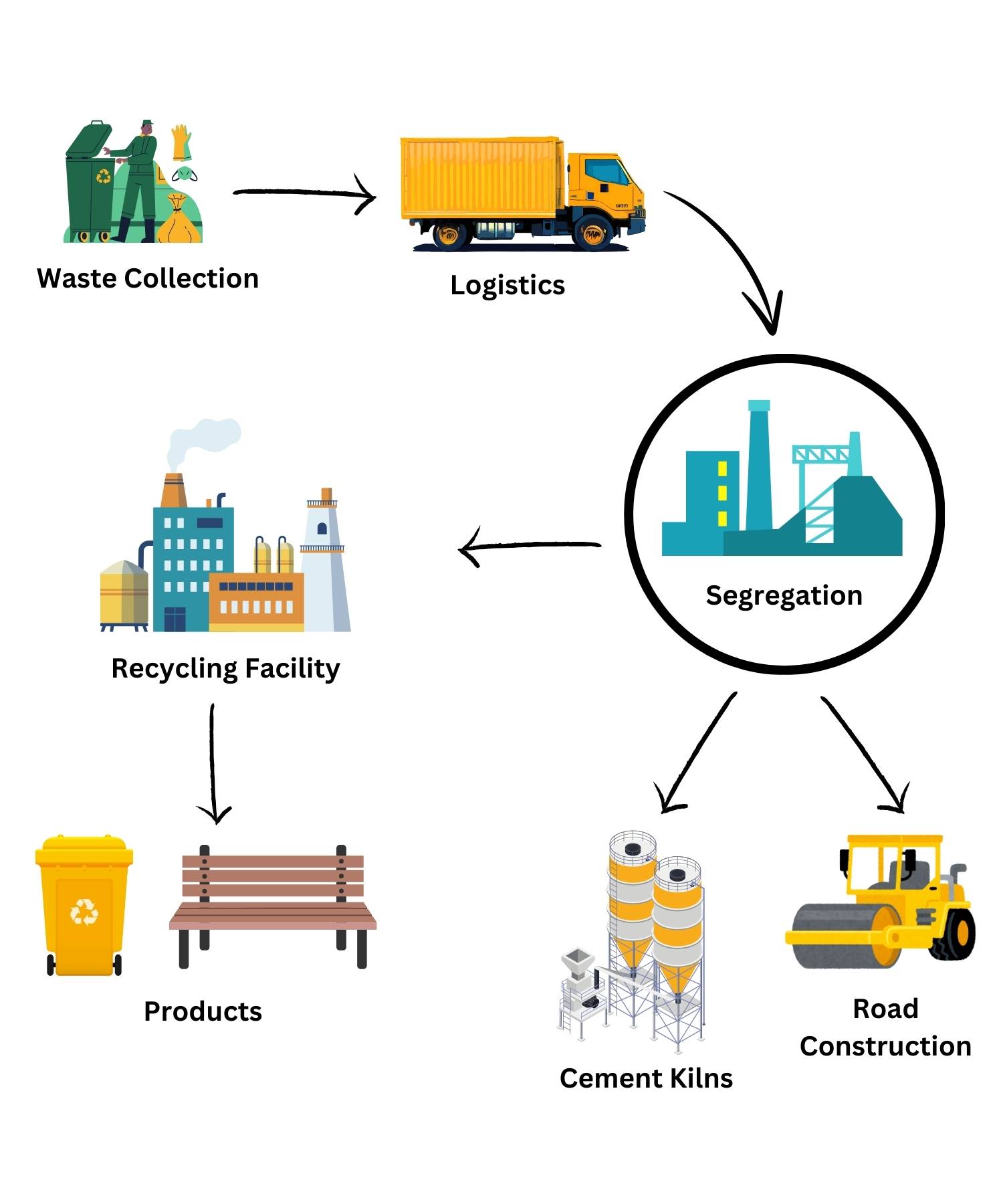
Extended Producer Responsibility (EPR) for tires requires manufacturers to actively manage the environmental impact throughout the entire product life cycle, including key stages such as collection, recycling, and proper disposal.
Tire manufacturers must register on the Central Pollution Control Board (CPCB) portal and adhere to set waste management targets. Failure to comply with these regulations will result in environmental compensation penalties imposed by the CPCB.
Companies engaged in tire production or distribution are required to complete the registration process on the CPCB portal and submit detailed annual returns outlining their waste tire responsibilities.
The adoption of Extended Producer Responsibility (EPR) greatly reduces the environmental impact by encouraging tire reuse and recycling. This approach decreases the need for new raw materials and minimizes negative environmental effects.
Producers, manufacturers, sellers, and importers are responsible for implementing environmentally safe waste management practices for tires.
Companies engaged in tire production or distribution are required to complete the registration process on the CPCB portal and submit detailed annual returns outlining their waste tire responsibilities.
The adoption of Extended Producer Responsibility (EPR) greatly reduces the environmental impact by encouraging tire reuse and recycling. This approach decreases the need for new raw materials and minimizes negative environmental effects.
Producers, manufacturers, sellers, and importers are responsible for implementing environmentally safe waste management practices for tires.
Advantages of EPR Registration
Decreased Plastic Waste
EPR registration can enhance environmental performance and reduce plastic waste.
Edge Over Competitors
EPR-registered companies can gain a competitive edge by attracting environmentally conscious consumers.
EPR Registration Process
EPR Registration
EPR Registration through the Central Pollution Control Board's Centralized Portal

EPR Compliance
Completion of EPR Compliance, including Monthly, Quarterly, and Annual Requirements
EPR Target Fulfillment
To meet EPR Targets, Producers, Importers, and Brand Owners (PIBOs) must acquire EPR Plastic Credits from EPR-registered Recyclers and Co-Processors (PWPs)
Annual Return Report
Submission of the Annual Return Report and Monthly Report E
GET IN TOUCH
General FAQs
Under Tyre EPR, tyre producers are responsible for financing and/or managing the collection, recycling, and proper disposal of tyres at the end of their useful life. This usually involves establishing collection systems, recycling facilities, and ensuring that tyres are disposed of correctly.
Yes, Tyre EPR is implemented in various forms and degrees worldwide. Many countries and regions have adopted EPR policies for tyres to manage the environmental and public health risks associated with tyre waste.
Tyre EPR is important because it helps prevent environmental pollution and health hazards related to improper tyre disposal, such as tyre fires and the release of harmful chemicals. By making producers accountable, EPR promotes proper recycling and disposal practices for tyres.
Tyre EPR fosters recycling by providing financial incentives for tyre producers to invest in collection infrastructure, recycling technologies, and public awareness initiatives. This encourages consumers to dispose of tyres properly and helps facilitate their recycling into new products or materials.